Sunstory · Chapter 11
The wolf behind the Sun
Told by Zora Rae deSole
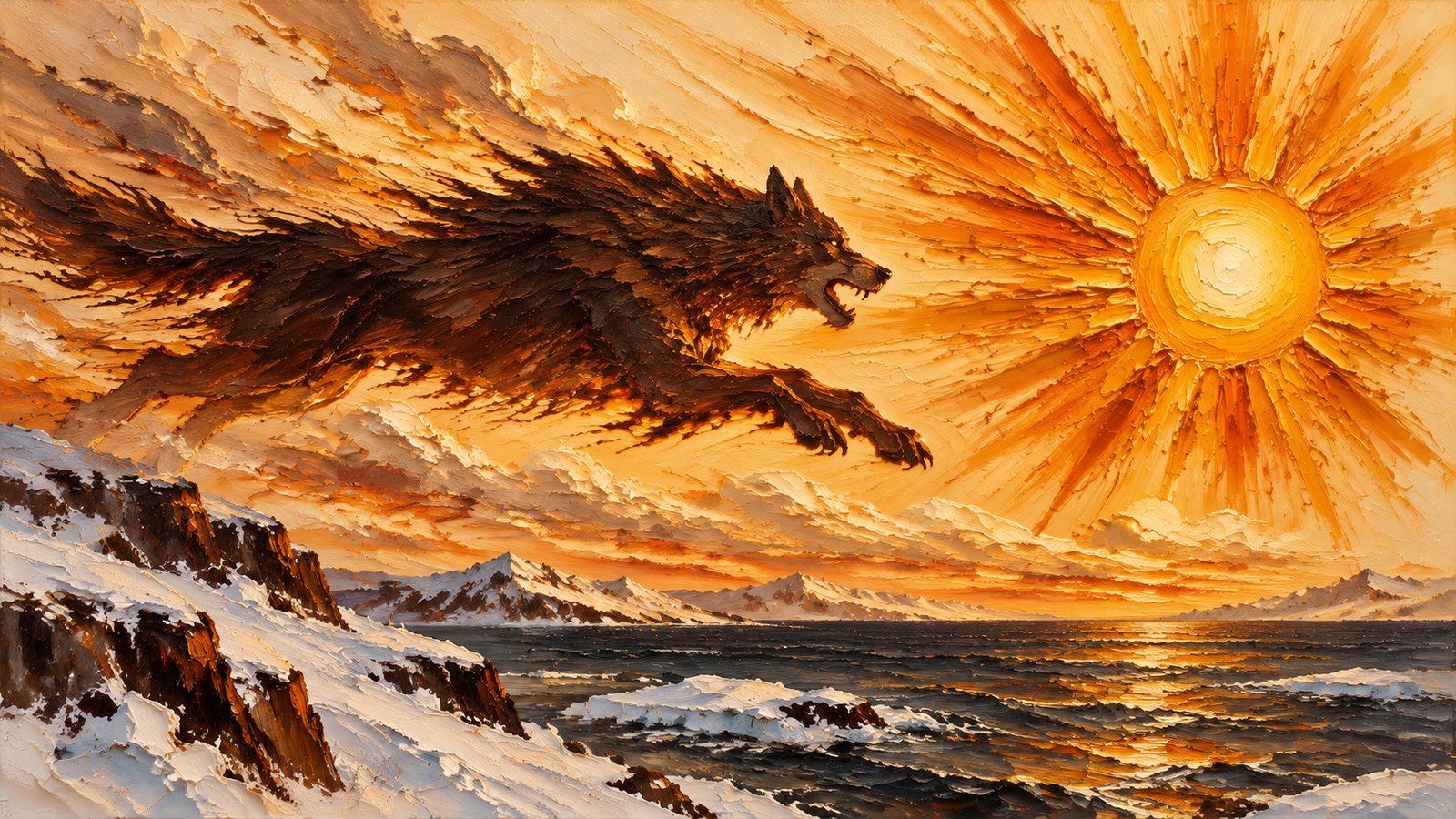
North of everything Rome ever ruled, winter swallows the light. For months the Sun is a low pale rumor, and people learn in their bones what this whole book is about. So it makes sense that in the far north, the Sun's story became a chase.
Norse lands · the old poemsA girl named Sun
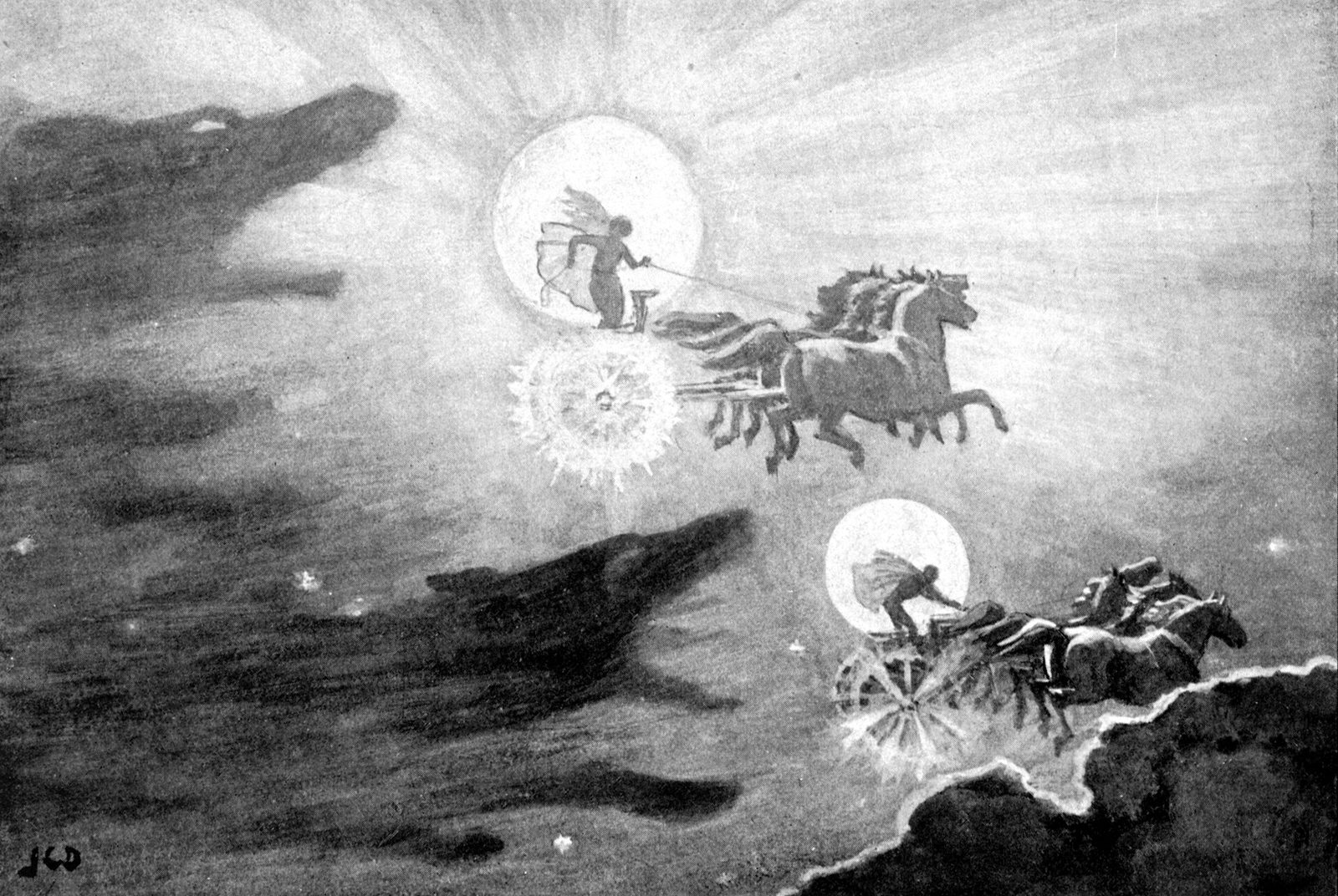
The Norse poems, the Eddas, say there was once a man named Mundilfari who had two children so beautiful that he named his daughter Sól, Sun, and his son Máni, Moon. The gods thought that was presumptuous, so they took the children up into the sky and gave them the job their names had claimed: Sól would drive the chariot that carries the sun across the world, and Máni would steer the moon. Her horses were Arvak, Early-Waker, and Alsvith, All-Swift, and because even the horses of the sky needed protecting from that heat, the gods set a shield called Svalin before the sun. If it ever fell, the poems say, the mountains and the sea would catch fire.
And behind her, always, runs the wolf. Sköll follows the shining goddess and never stops; a second wolf, Hati, pursues her brother. That is what a day is, in the North: a beautiful driver, swift horses, and something hungry behind, all day, every day. It is the most honest picture of time anyone ever made.
The end, and afterThe daughter who takes the road
Norse stories do not flinch, so here is how it ends. At Ragnarök, the doom of the gods, the wolf finally catches the Sun, and the sky goes dark, and the gods themselves die. And then the old poem asks the question anyone would ask, the way a kid asks it: when the wolf has taken the Sun, where does the Sun come back from?
Listen to the answer, because it is one of my favorite sentences in any mythology. The Sun, says the wise giant in the poem, bears a bright daughter before the wolf catches her, and when the gods are gone, that daughter shall ride her mother's road. The light does not argue with the dark, and it does not surrender to it either. It simply hands itself on. Every sunrise you have ever seen is that daughter, still on the road.
The Baltic · still sung todaySaule and the silver shoes
East of the Norse world, in Lithuania and Latvia, the Sun is a goddess too: Saule, who holds the well-being and new growth of everything alive. Each day she rides the sky in a chariot with copper wheels, drawn by horses that never tire, never rest, never sweat. Toward evening she washes her horses in the sea, then drives through silver gates to her castle at the end of the ocean. Her husband was the Moon, who proved as changeable as he looks, and courted the Morning Star; the Thunderer cut him to pieces for the insult, which is as good an explanation of the moon's broken, mending face as anyone has managed.
And this one never faded into books. Farmers prayed to Saule at sunrise and at sunset. Her great feast was midsummer, Ligo, the night of June 23, when the Sun herself, wearing a wreath of red flowers, was said to dance on a silver hill in silver shoes. People lit huge fires on the hills, wore flower crowns, sang the old songs until dawn, and leaped over the flames for luck. They still do. In Latvia, on the shortest night of the year, the fires burn and the songs go on all night, and the Sun is still the guest of honor: one of the oldest sun feasts in Europe, still dancing.
But before we cross any ocean, go further north still - past the wolf's country, past even the long ships, to the top of the world, where the winters are so dark the Sun disappears completely. Up there, loving the Sun means waiting for it to come home.
Notes and sources
- Poetic Edda · Grímnismál 37-40 (Bellows translation) - Arvak and Alsvith, the shield Svalin, the wolves Sköll and Hati, with Snorri's account of Mundilfari's children in the notes.
- Poetic Edda · Vafthrúðnismál 46-47 (Bellows translation) - the wolf takes the Sun, and her daughter rides her mother's road.
- Encyclopaedia Britannica · Saule - the Baltic sun goddess, copper wheels, the sea castle, the Moon's punishment, farmers' prayers, the Līgo midsummer feast.