Sunstory · Chapter 12
The Sun that comes home
Told by Zora Rae deSole
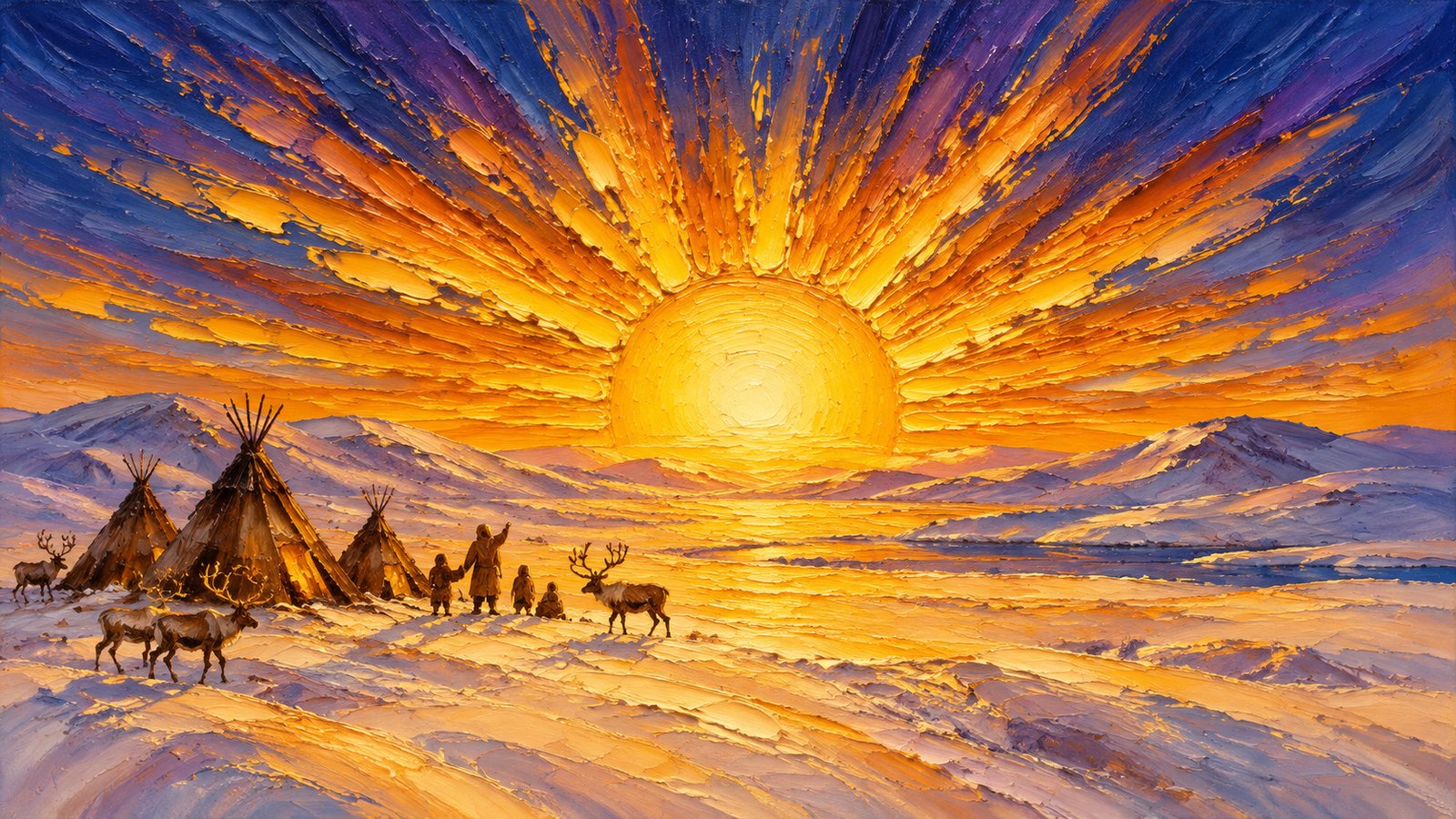
In the far north, above the Arctic Circle, winter swallows the Sun. For weeks - in the very farthest places, for months - it never rises at all. The snow glows blue at noon, the stars shine all day, and people live by lamp and firelight until the morning comes back. Two peoples of the high north, the Sámi of Sápmi in northern Europe and the Inuit of Greenland and the American Arctic, built their oldest stories around exactly that: the Sun that leaves, and the Sun that comes home.
Sápmi · the far north of EuropeThe Sun is a mother
For the Sámi, the Sun is a she: Beiwe, or Beaivváš. The old accounts call her the mother of all life and every living animal. She is the burning fire in the sky and the force that comes back every year: in spring she makes the hillsides turn green so the reindeer can eat, and she watches over the reindeer calves when they are born. Travelers in the mountains asked her to shine on their path. People left her offerings, as you would for someone your whole herd depends on - because it did.
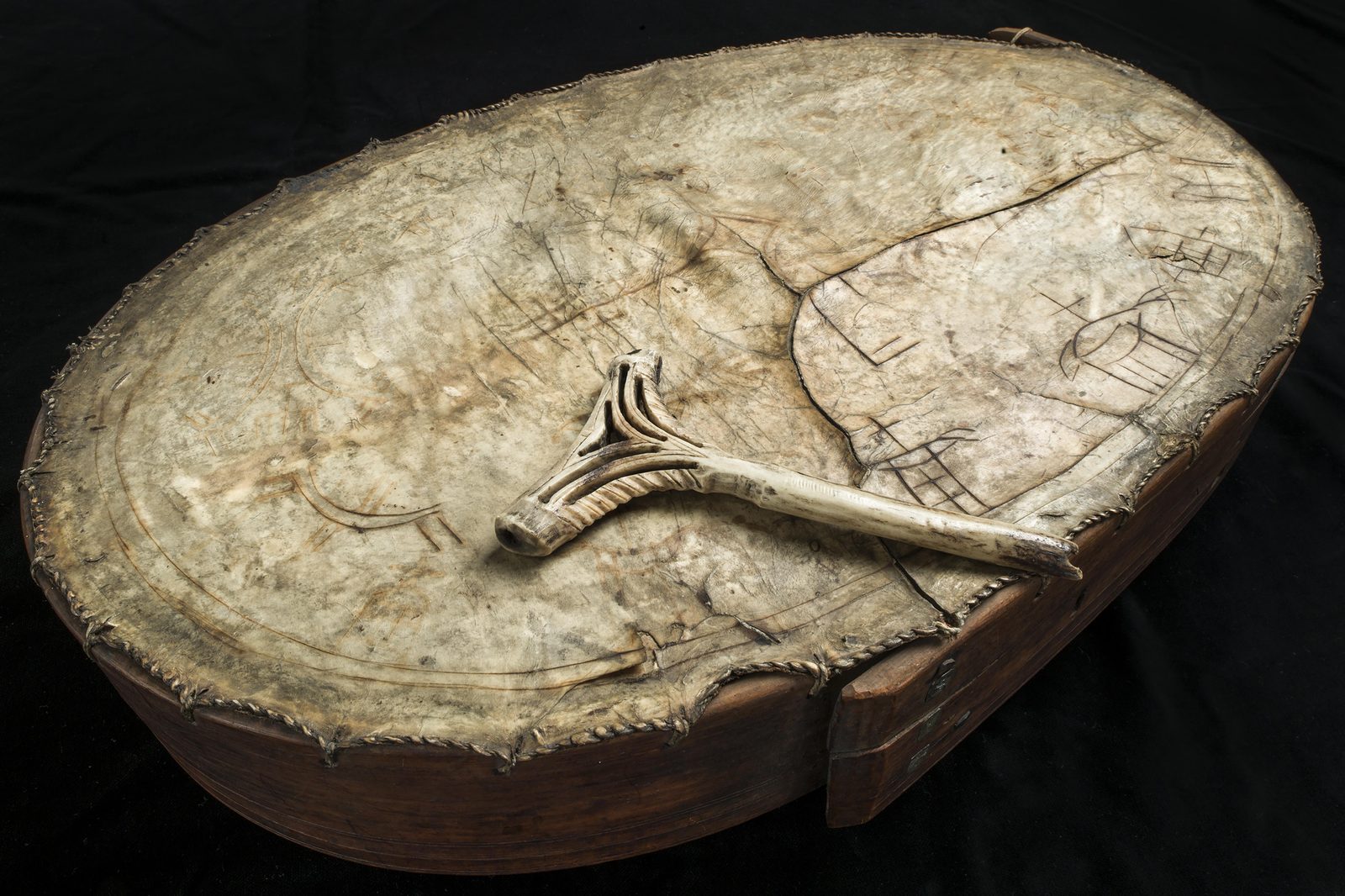
The Sámi painted her on their drums. The noaidi, the Sámi shaman, beat a skin drum painted with a map of the whole world - gods, animals, mountains, tents - and on many of those drums the Sun is a four-cornered sign with a line running from each corner: four reins, the old writers said, or four beams of light. Either way, the meaning is the same. The Sun holds the reins of life, and the drum remembers it.
Greenland · told for centuriesThe sister who ran into the sky
Across the top of the world, the Inuit of Greenland told the story of Malina and her brother Anningan. When they were young they played together in the dark. Then one night her brother hurt her, and Malina fought free and ran - up, into the sky, to be safe - and became the Sun. Anningan followed her and became the Moon, and he has chased her ever since. That is why, the story says, you almost never see the Sun and the Moon in the sky together.
The story explains more, the way the best old stories do. When Anningan forgets to eat, he grows thinner and thinner until he must leave the sky for three days - and that is the changing face of the Moon. And on the rare day the Moon finally catches the Sun, the sky goes dark in the middle of the day. An eclipse is the moment the chase comes to an end - and then the Sun slips free, and shines on.
The Arctic · every springThe day the light comes home
Every year the long night ends. The first thin edge of the Sun lifts over the horizon, and the snow turns to gold. For the Sámi, Beiwe's return is not a metaphor: it is grass on the hillsides, calves in the spring, warmth on your face. And the symbol never went away. Modern Sámi artists and healers still put the Sun at the center of new drums and ceremonies. One Sámi drum maker, asked by researchers about his work, put it as simply as anyone ever has: the Sun is the wellspring of life for the Sámi people.
So at the top of the world the Sun is a mother and a survivor - the one who comes home, and the one who got away. Now cross the ocean south, to a world that never heard a word of Rome, or Greece, or any chariot at all. In the lands we now call Mexico, the Sun was a warrior, and it needed to be fed.
Notes and sources
- Francis Joy, Religions (2020) · The Importance of the Sun Symbol in the Restoration of Sami Spiritual Traditions - Beiwe the Sun as mother of life, spring greenery and the reindeer calves, the four-cornered Sun sign on the drums, the modern healing drums.
- eCUIP Digital Library, University of Chicago · Inuit cultural astronomy - Malina and Anningan, the chase across the sky, the Moon's cycle and the eclipse.