Sunstory · Chapter 17
The Sun woman
Told by Zora Rae deSole
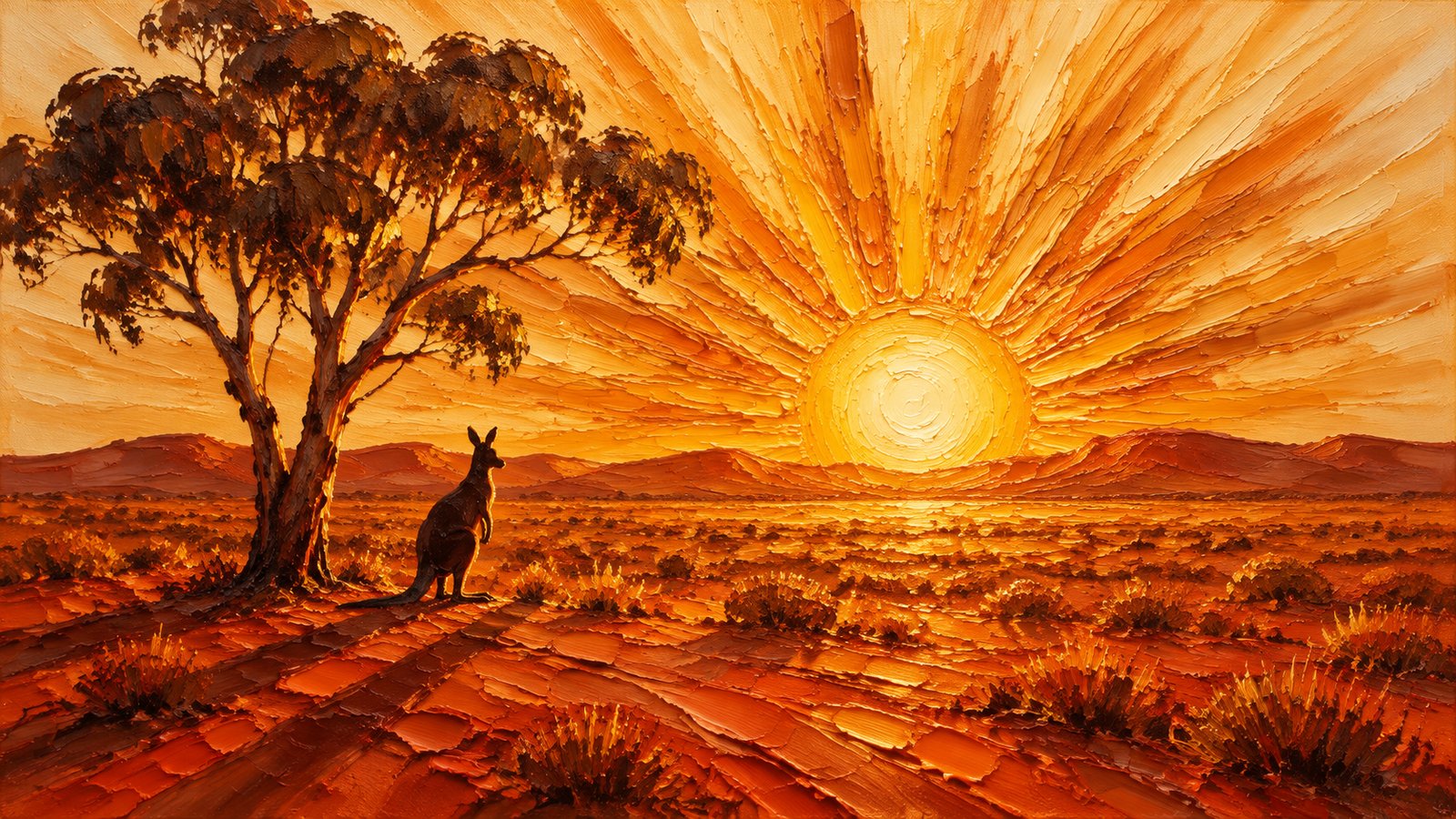
South of the Pacific islands lies Australia, home to the oldest continuous cultures on Earth. Aboriginal and Torres Strait Islander peoples have watched the Sun from that red land for many thousands of years - longer than any other tradition in this book - and they watched it closely: people marked where the Sun rose and set through the year, and knew the solstices and equinoxes, the days the Sun stands at its farthest north and south. And in the traditions of Arnhem Land in the far north, the Sun herself is a woman. Her name is Walu.
Arnhem Land · the far northThe Sun woman
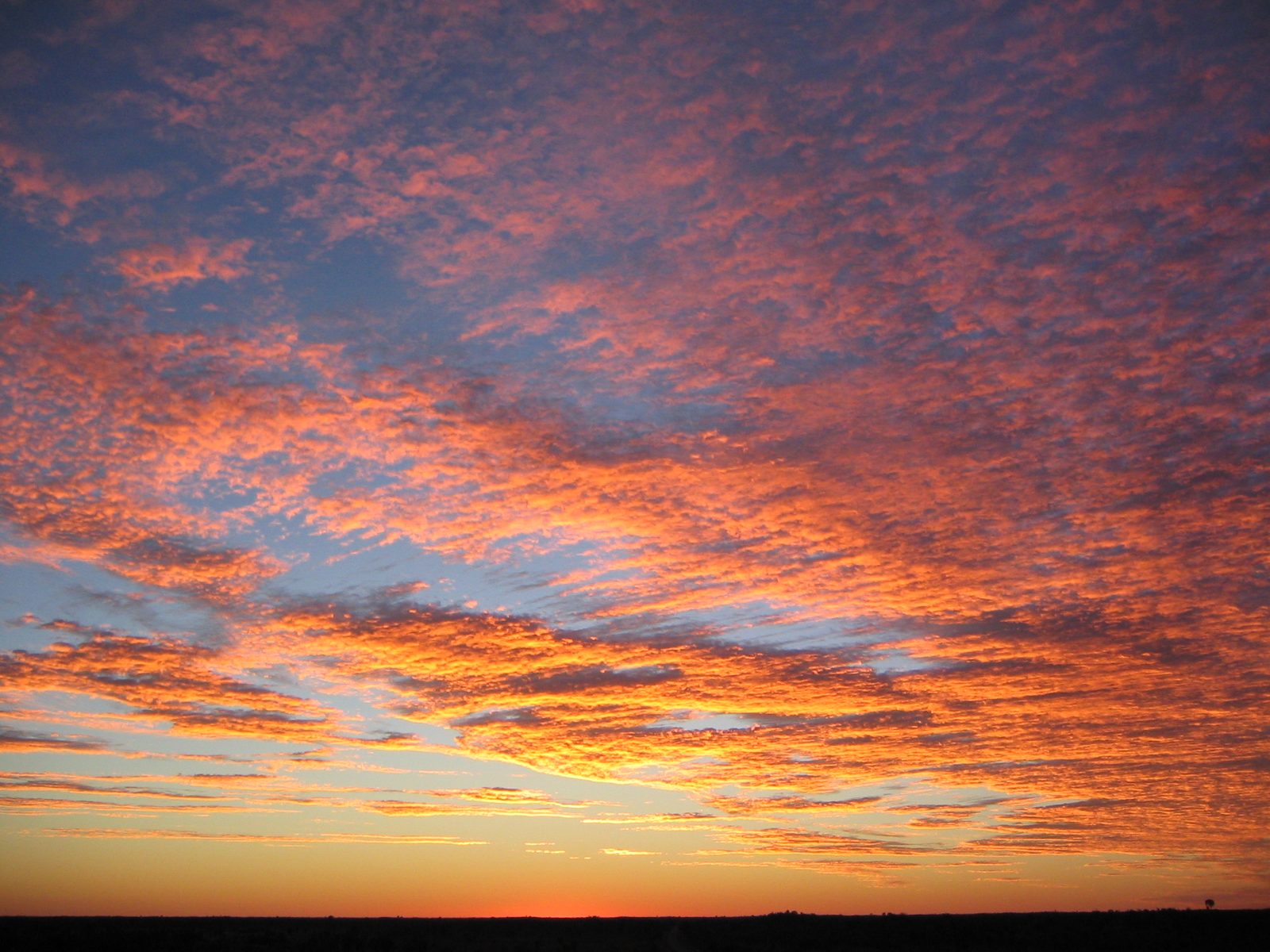
In Yolngu tradition, every single dawn is something Walu does. Each morning she lights a small fire, and that first glow is the dawn. She decorates herself with red ochre for the day, and some of the red dust spills onto the clouds - and that is why the sunrise is red. Then she takes up a blazing torch of stringybark and carries it across the sky from east to west, and her torch is the daylight. As she comes down at the end of her journey, the red ochre dusts the clouds again, and that is the red sunset. At her western camp she puts the torch out. Night. Then she walks back through the darkness, under the world, to her morning camp - and lights the fire again. Every sunrise in Arnhem Land is Walu, keeping her promise to come back.
Across the continent · many peoplesA country full of Sun women
And she is not alone. The Wotjobaluk people of western Victoria tell of a woman carrying a bark torch across the sky. The Meriam people of the Torres Strait say the Sun returns to the east by traveling under the sea. The Ramindjeri people of South Australia dress her in a kangaroo skin, red like the dawn. And the Noongar people of the southwest divide her journey into nine named phases of light - dawn, daybreak, sunrise, morning, noon, early and late afternoon, and the last glow - nine words for one day, which tells you how carefully, and how lovingly, that day was watched. Many peoples, one red land, one Sun going over, day after day, for thousands of years.
Victoria · a calendar in stoneThe stones that mark the Sun
They did not only watch; they built. At a place called Wurdi Youang in Victoria, the Wathaurong people set up an arrangement of stones whose lines run east to west, with prominent stones pointing to the places where the Sun sets at the solstices and the equinoxes - the turning points of the year, marked in basalt on a hill. A stone calendar for the Sun, like Newgrange and Angkor, raised by people who never saw either. Nobody told them to build it. The Sun itself was reason enough.
One land remains, and it is the first one. Long before Newgrange, before Egypt, before anyone in this book, there were people in Africa looking up at the same Sun. The human story began there, and the Sun was in it from the very first page.
Notes and sources
- Australian Indigenous Astronomy · The Sun - Walu the Sun woman of Arnhem Land, her morning fire and red ochre, and how peoples marked the solstices and equinoxes by the Sun's rising and setting points.
- Australian Curriculum · Aboriginal and Torres Strait Islander astronomy (teacher background) - the Sun women of the Yolngu, Wotjobaluk, Meriam, Ramindjeri and Noongar peoples, the nine named phases of daylight, and the Wurdi Youang stone arrangement aligned to the Sun.