Sunstory · Chapter 16
The boy who lassoed the Sun
Told by Zora Rae deSole
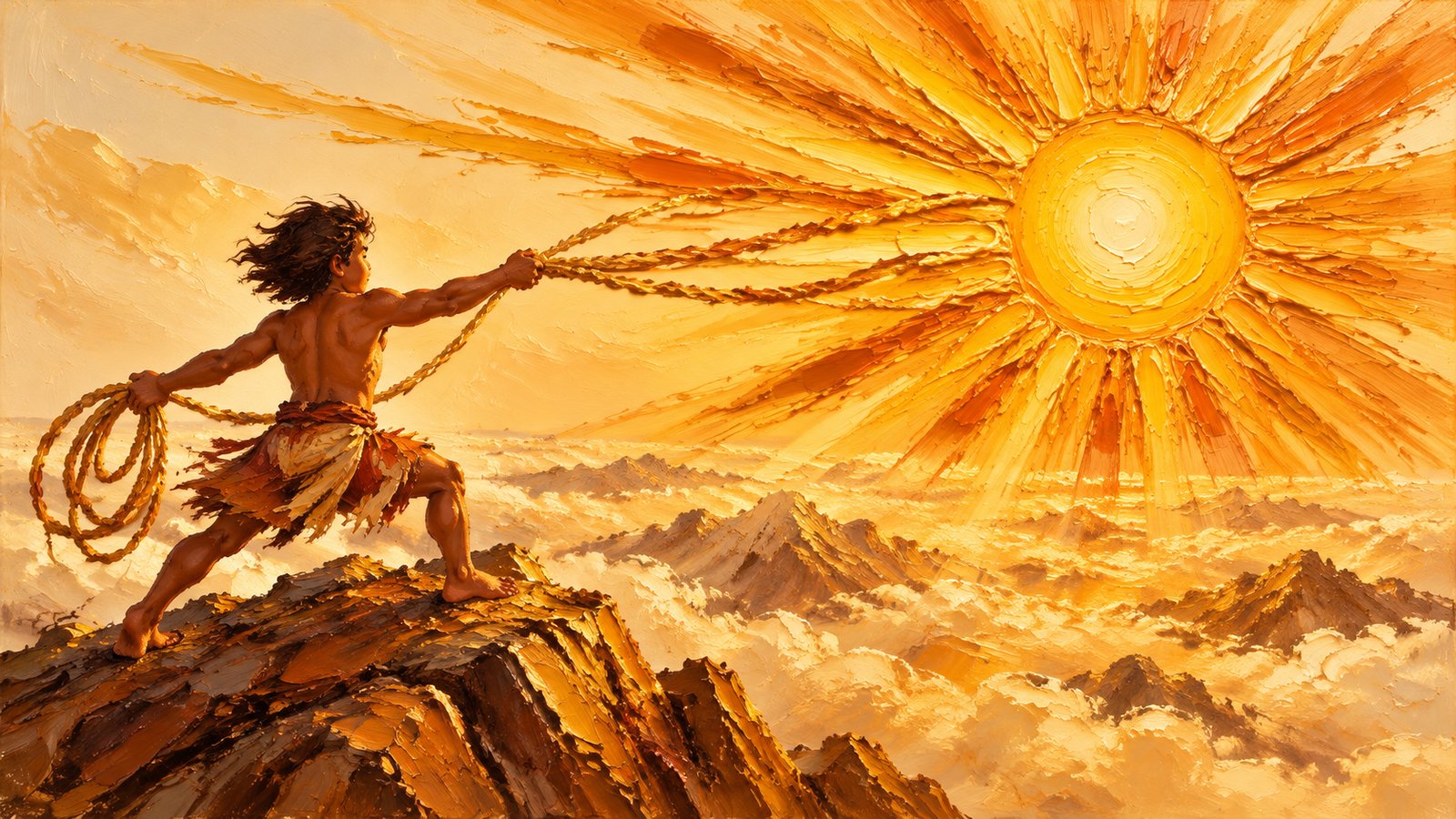
Across the Pacific, on islands scattered farther than any other people on Earth ever spread by boat, the Polynesians carried one hero everywhere they went. His name was Maui. He fished islands up out of the sea with a hook. He stole fire for people who had none. And once, because the days were too short, he caught the Sun itself.
Hawaii · the house of the SunWhy the days got longer
Long ago, the Hawaiian story says, the Sun ran quickly across the sky. There was hardly time to cook food; a prayer to the gods could not even be finished before dark. And Maui's mother, Hina, had a problem you can picture exactly: she made kapa, the bark-cloth that was Hawaii's only clothing and bedding, and kapa has to dry in the sun, and the Sun raced over so fast that she had barely laid it out before she was gathering it up again in the dark. Every day. Imagine laundry day that never, ever ends.
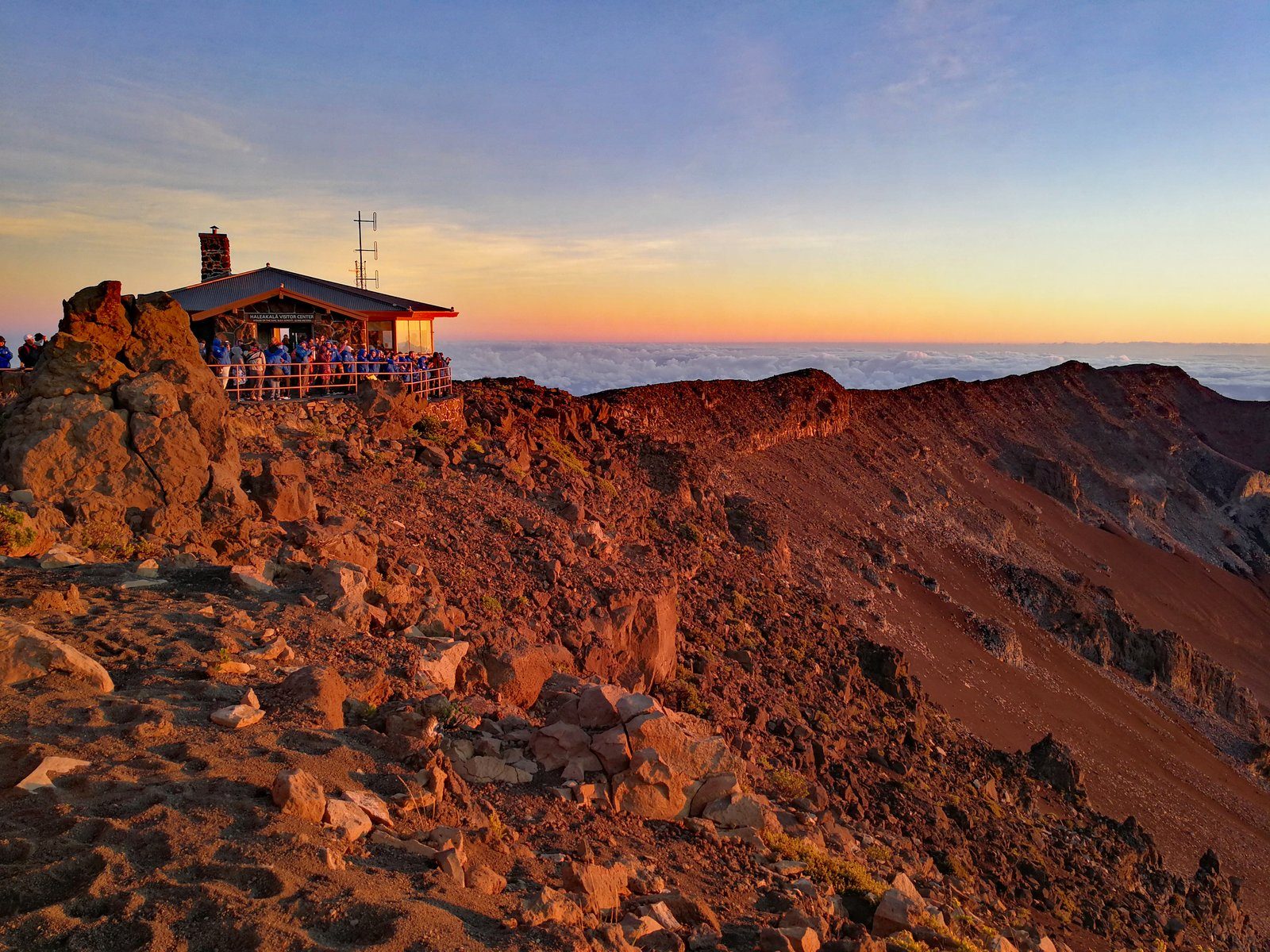
So Maui decided to slow the Sun down. He was methodical about it, which I love. First he climbed the ridges and simply watched, tracking the Sun's path for days, until he knew it: the Sun rose on the eastern side of the great mountain Haleakala and crossed over its top. Then he took fifteen strong cords from his mother, and instructions to find a certain wiliwili tree, where his blind grandmother lived, and where the Sun stopped to eat the bananas she cooked. Maui stole the bananas, let himself be sniffed out, and announced himself as Hina's son. Grandmother, like grandmothers everywhere, turned out to be entirely on his side. She gave him a sixteenth cord and a stone adze, and told him what to do. Maui hid by the tree, and when the Sun's legs came over the ridge, he snared them, one by one, and when the Sun tried to dive back down the mountain into the sea, Maui tied the cords to the tree and hauled him back up and struck him with the adze until the Sun begged for his life and promised to go slower. And he has kept the promise ever since. That mountain still carries the name of what happened there: Hale-a-ka-la. The house of the Sun.
Across the Pacific · the world of lightWhat light means
The Maui stories are known to cultures all across the Pacific, and the deed list travels with him: the islands fished up, the fire won, the Sun captured. In Aotearoa, New Zealand, Maori tradition puts the same hero at the same work. But notice something deeper. In Maori creation, the world begins in Po, the darkness, and everything that matters is the struggle toward Te Ao Marama, the world of light. To this day, carved meeting houses are opened in dawn ceremonies, because the arriving Sun re-enacts the creation itself, and the great welcome ceremony, the powhiri, walks guests from darkness into light. Imagine that. Every dawn, the world is created again, and you are invited to watch.
And people still go up the mountain. Before sunrise, in the cold and the dark, visitors climb to the top of Haleakala and wait, the way Maui waited by the wiliwili tree, until the Sun comes up out of the sea of clouds into his own house. Nobody ties him up anymore. He keeps his promise all by himself.
One more ocean crossing, south this time, to the oldest Sun-watchers of all. On the great southern continent, people have been reading the sky for many thousands of years - and there, once again, the Sun is a woman.
Notes and sources
- National Park Service, Haleakala National Park · Deities - the Hawaiian mo'olelo of Maui snaring the Sun: Hina's kapa, the cords, the wiliwili tree, the grandmother, the adze, the promise, and why the mountain is the house of the sun.
- Te Ara, the Encyclopedia of New Zealand · Maori creation traditions - Maui capturing the sun among the deeds known across the Pacific; Po the darkness and Te Ao Marama the world of light; dawn ceremonies and the powhiri.