Sunstory · Chapter 2
The Sun with a name
Told by Zora Rae deSole
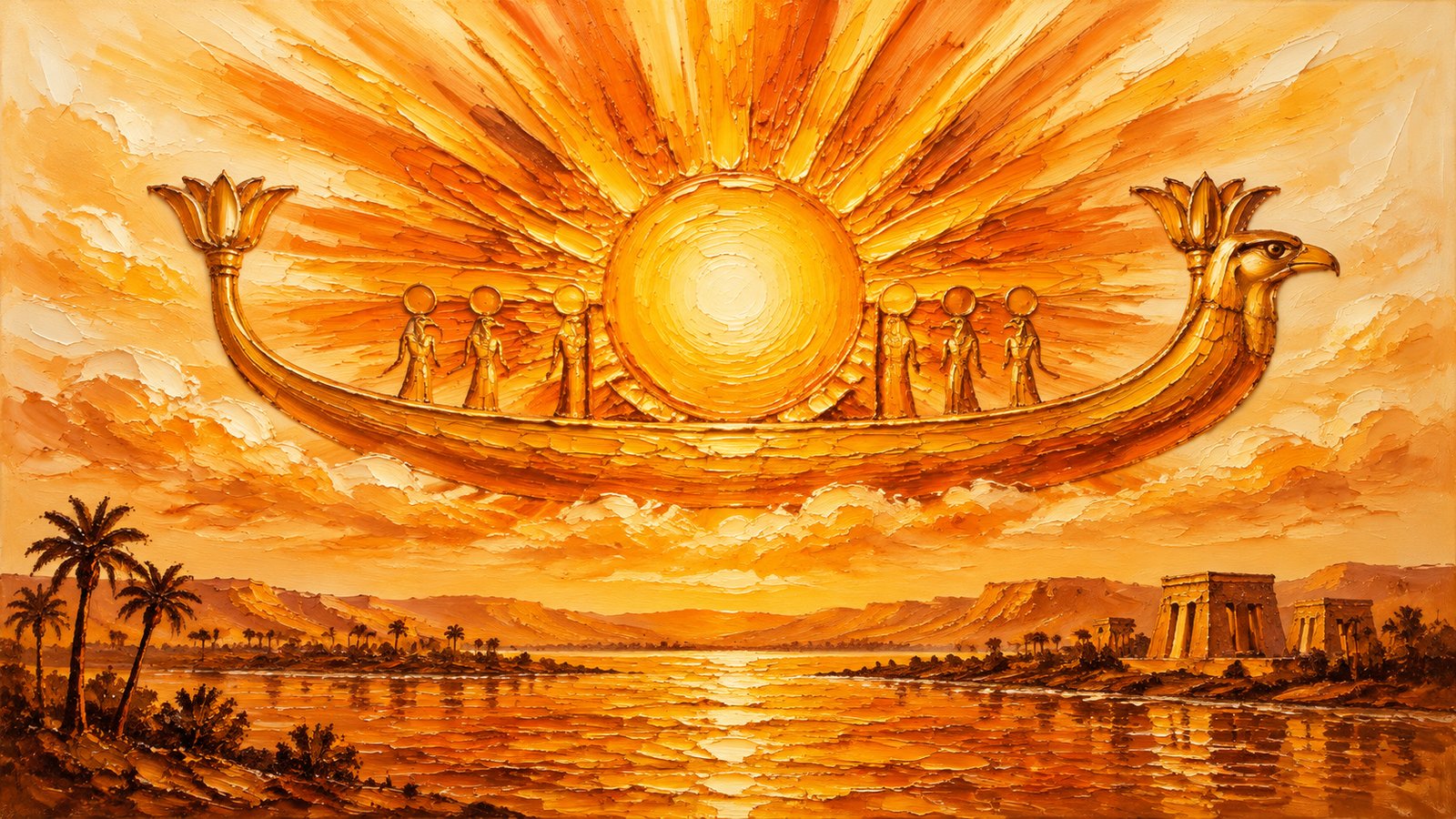
Egypt is where our story gets its first name, and the name is the simplest one possible. Ra means sun. Not god of the sun. The Sun itself, riding a boat across the sky.
Egypt · from about 2600 BCThe oldest love story in writing
The oldest religious writings we have, the Pyramid Texts carved inside royal tombs at Saqqara around 2400 BC, already speak of Ra as the great king who gathers the souls of the dead into his golden boat. His holy city was Iunu, which the Greeks later called Heliopolis: the city of the Sun. Egyptians would go on worshipping him for almost two thousand years, about as long as Christianity has existed so far.
The picture they painted of him is one of the loveliest in any religion. Every morning Ra sails out in his boat and crosses the sky, and everything in the world grows warm and possible. Every evening he sinks into the underworld, and there, in the dark, a monstrous serpent named Apophis attacks his boat, trying to swallow the Sun so it can never rise again. Every night Ra and his defenders fight the serpent off. Every morning the Sun wins. That is why sunrise matters: it is a victory, won again for us every single day.
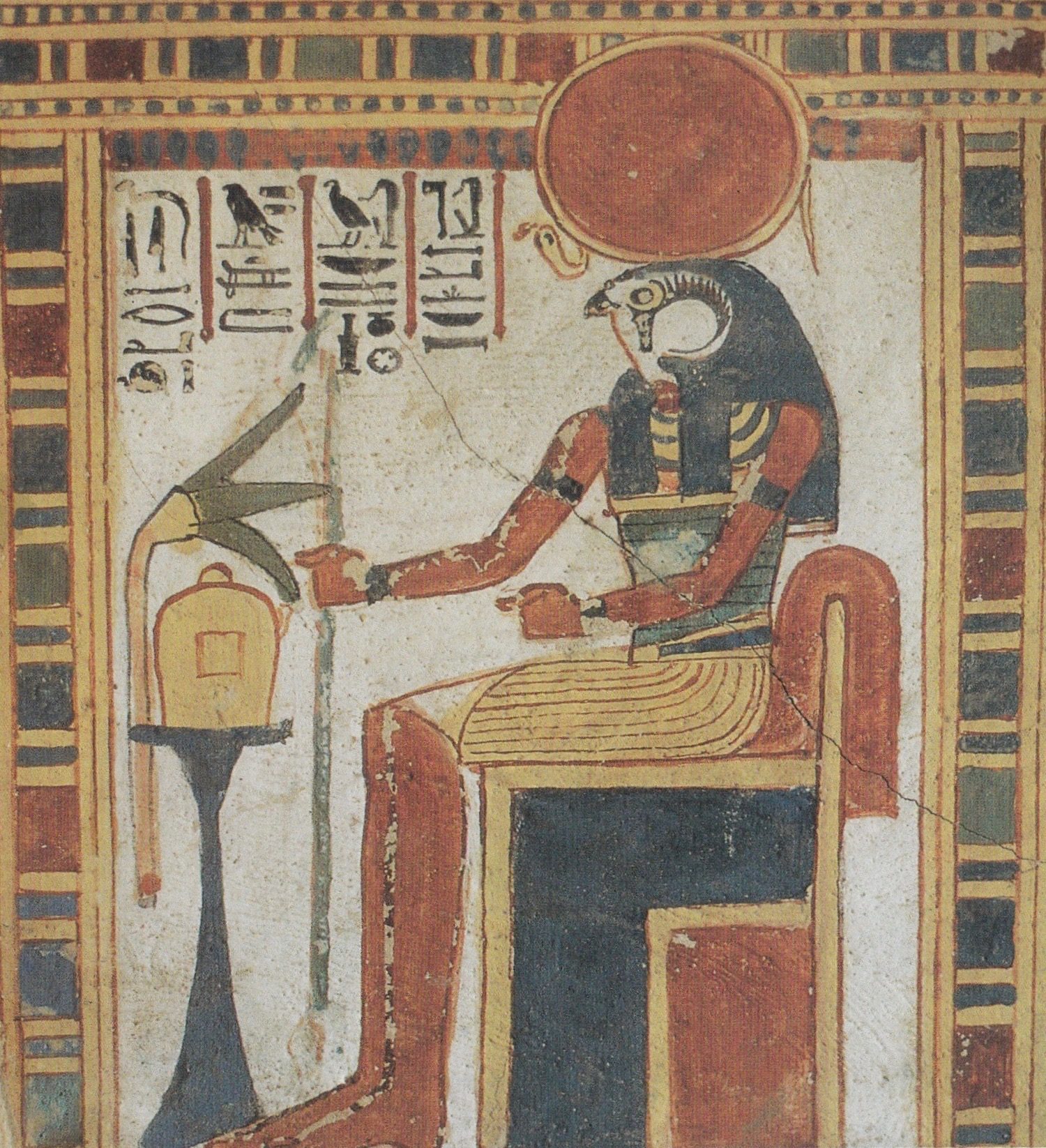
Egyptians drew him as a man with the head of a falcon and a red disk on his head, sometimes with a cobra curled around the disk. Over the centuries he joined with other gods: Amun-Ra, king of the gods, and Ra-Horakhty, Ra of the two horizons. One Sun, many faces, worshipped without pause while empires rose and fell around it.
Egypt · about 1350 BCThe king who said there was only the Sun
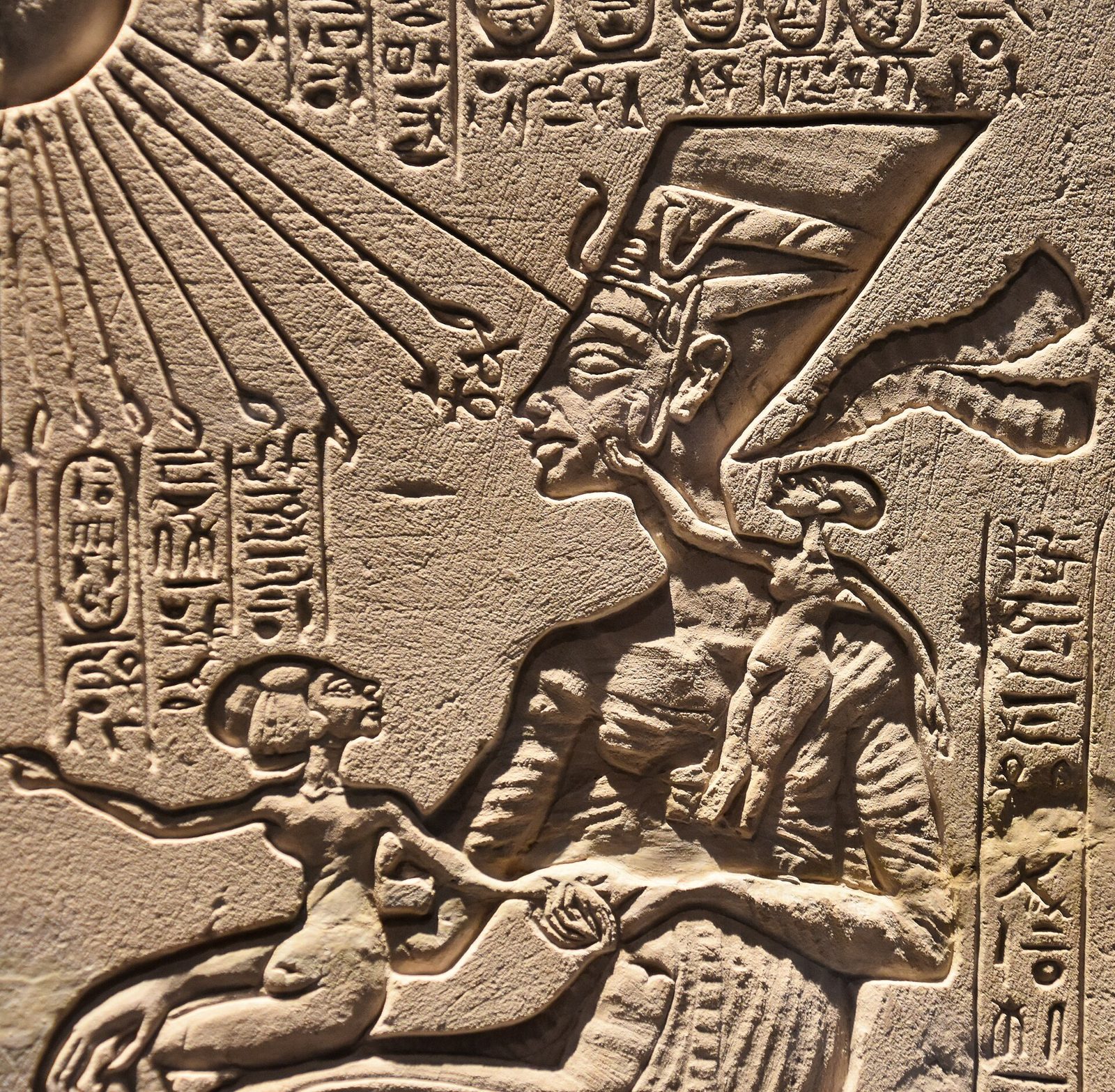
Then, about 1350 BC, Egypt produced the strangest chapter in this whole book. A young pharaoh named Amenhotep IV came to the throne of a land where the priests of the god Amun had grown so rich they owned more land than the crown. In the fifth year of his reign, the king did something no one had ever done: he declared that all the old gods were finished. There was one god only: the Aten, the visible disk of the Sun, whose rays reach down and end in little open hands.
He changed his own name to Akhenaten, useful to the Aten. He closed the temples of every other god and had their names hacked off the monuments. He moved the whole capital to a brand-new city, Akhetaten, built for the Sun alone, and there he wrote, or had written, one of the great poems of the ancient world, the Great Hymn to the Aten. His god was light: above jealousy, above anger, simply existing, and by existing, causing everything else to exist. It was the first state religion with one god that history knows of, and it was a sun religion.
It did not last. The reforms were hated; the temples were the banks and markets and hospitals of Egypt, and closing them broke daily life. When Akhenaten died, his son took the throne under the name Tutankhaten and changed it to the name we know, Tutankhamun, putting Amun back where Aten had been. A later pharaoh, Horemheb, had Akhetaten pulled down stone by stone and the heretic king's name chiseled off everything. The erasing worked so well that Egypt forgot Akhenaten completely. He stayed forgotten for three thousand years, until explorers found his ruined city in the 1800s and archaeologists found his tomb in 1907.
So Egypt leaves us two legacies. From Ra, the Sun as the faithful friend who fights the dark all night and wins by morning. And from Akhenaten, the first attempt to say there is nothing else but the Sun. Some historians think the idea of one god over all, the idea that would reshape the world, was born in that bright, brief city on the Nile. Others argue the connection is overdrawn. Either way, it began with somebody looking up.
Across the desert, meanwhile, another people had given the Sun a different job. Not a traveler. A judge.
Notes and sources
- World History Encyclopedia · Ra - the barge journey, Apophis, Heliopolis, the Pyramid Texts, two thousand years of worship.
- World History Encyclopedia · Akhenaten and Amarna - the reform, the Great Hymn, the backlash and the erasure, the 19th-century rediscovery.