Sunstory · Chapter 3
The god who sees everything
Told by Zora Rae deSole
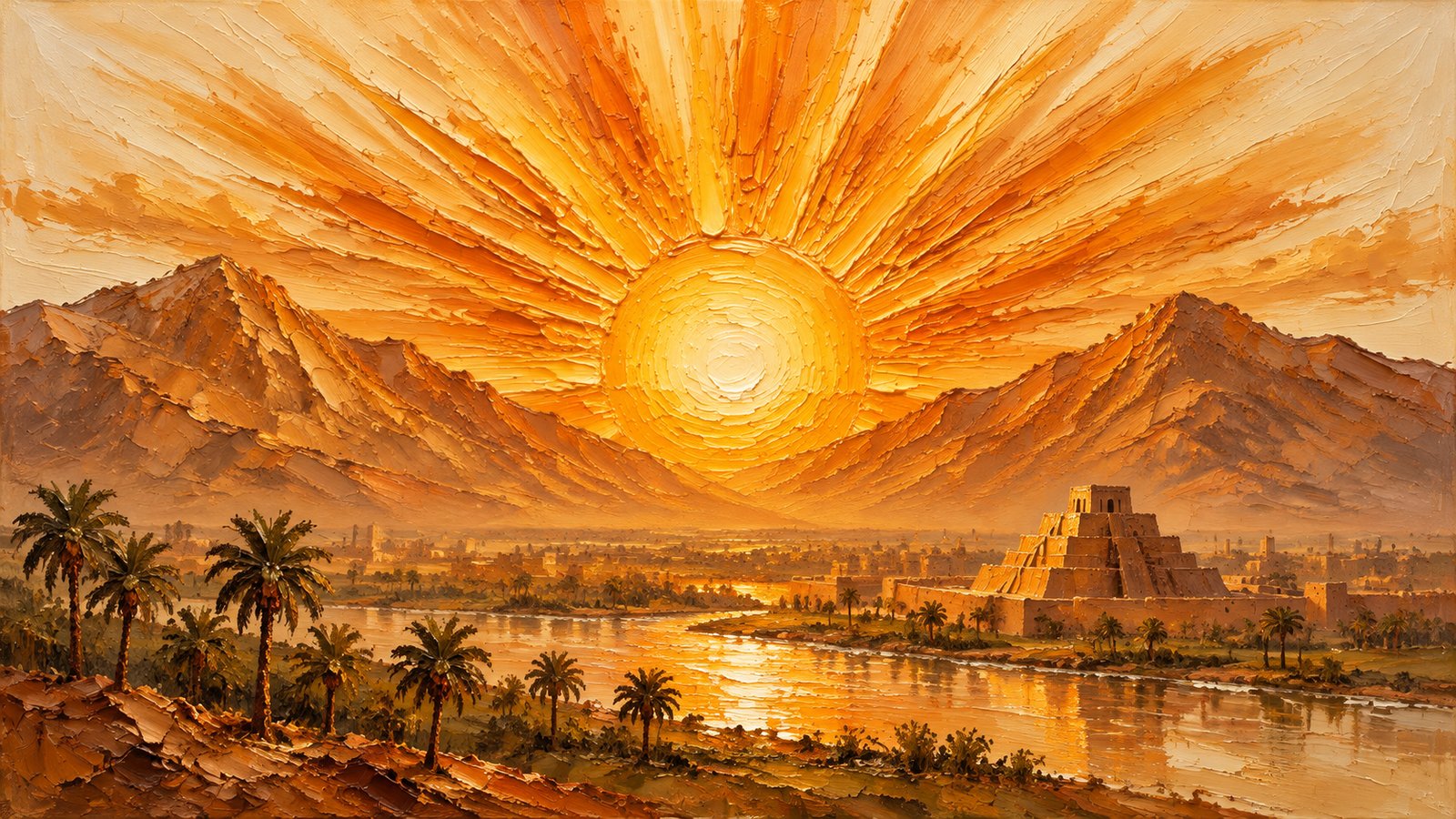
East of Egypt, between the Tigris and Euphrates rivers, people in Mesopotamia were writing about the Sun even earlier. The Sumerians called him Utu; the Akkadians and Babylonians called him Shamash. His name appears in the very earliest Sumerian writing, around 3500 BC, at the dawn of writing itself. Hymns addressed to him by name survive from about 2600 BC. And people were still worshipping him when cuneiform writing finally died out around 100 BC: more than three thousand years of sun worship, the longest unbroken run in this book.
Mesopotamia · from about 3500 BCNothing is hidden
Think about what the Sun does from the sky: it sees everything. Every field, every road, every market, every back alley. The Sumerians drew the obvious conclusion. Utu-Shamash was not only the bringer of light; he was the god of justice, the one witness no one could escape. His light was thought to reach every level of the world, even down into the underworld, and even into the human heart. There was nothing he did not see, and so he judged rightly.
His temples were called E-babbar, the Shining House, and his wife was Serida, called Aya in Akkadian: the goddess of the dawn. Even his marriage was about morning.
Babylon · 1792 to 1750 BCLaw as sunlight
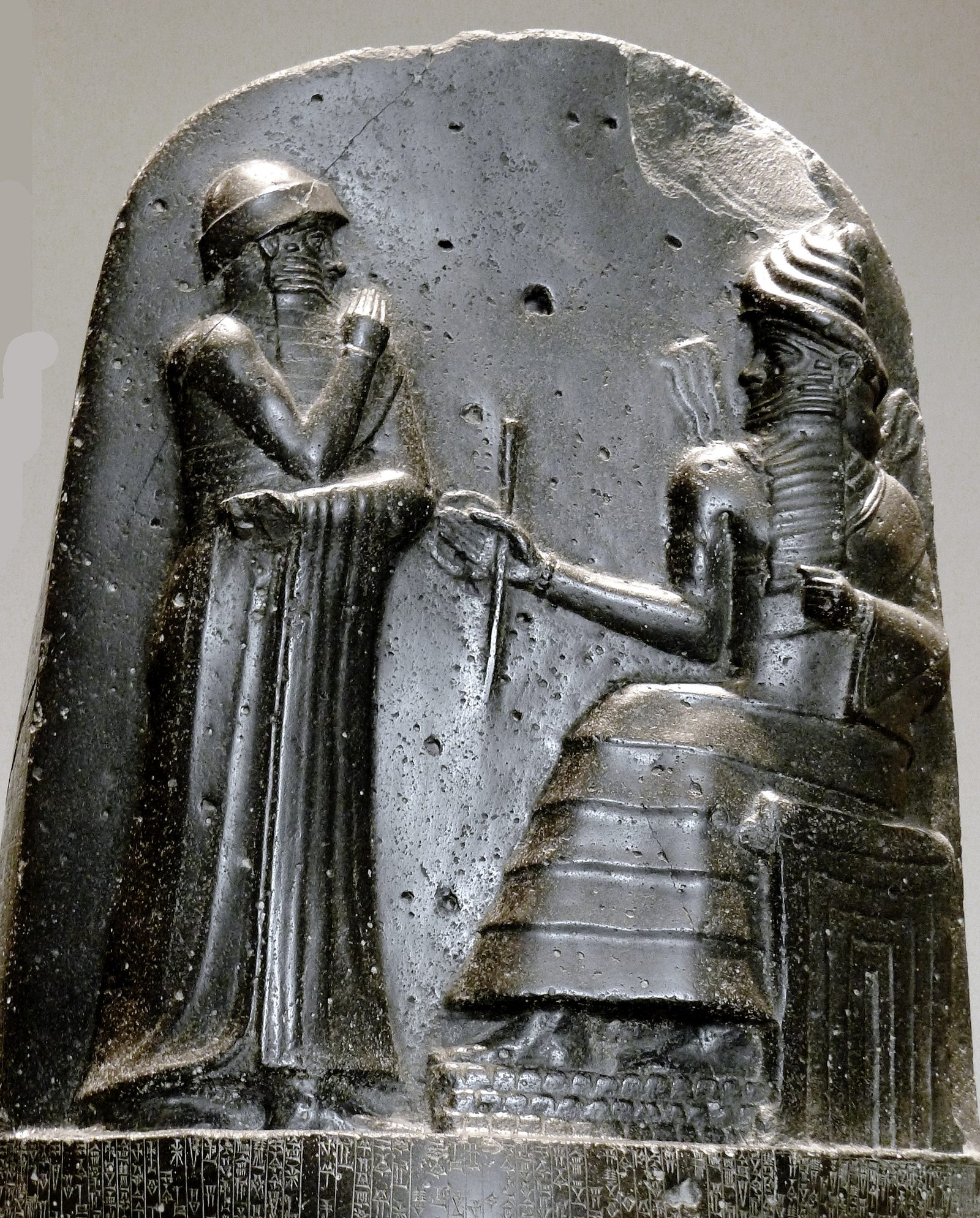
The most famous proof of all this stands today in the Louvre in Paris: a pillar of black stone, taller than a person, carved with the law code of King Hammurabi of Babylon. At the top, in the carving, Hammurabi stands before a seated god whose shoulders flare with rays. That is Shamash, and the stone says it plainly: the laws are his, handed down to the king.
It is worth pausing on how beautiful an idea that is. Law, for these people, was like sunlight: public, shining on everyone, nothing done in dark corners. When later Assyrian artists wanted a sign for divine power watching over their kings, they reached for the same Sun, and their winged sun disk flew onward into Persia and beyond. We will meet it again.
So by 1700 BC the Sun had already been a traveler and a judge, a friend and the only god. Follow the winged disk east now, over the mountains into Persia, where the Sun learned to keep promises.
Notes and sources
- World History Encyclopedia · Utu-Shamash - the sun as divine justice, E-babbar temples, Serida/Aya, Hammurabi's law code, the winged disk, three thousand years of worship.