Sunstory · Chapter 14
The Sun was their family
Told by Zora Rae deSole
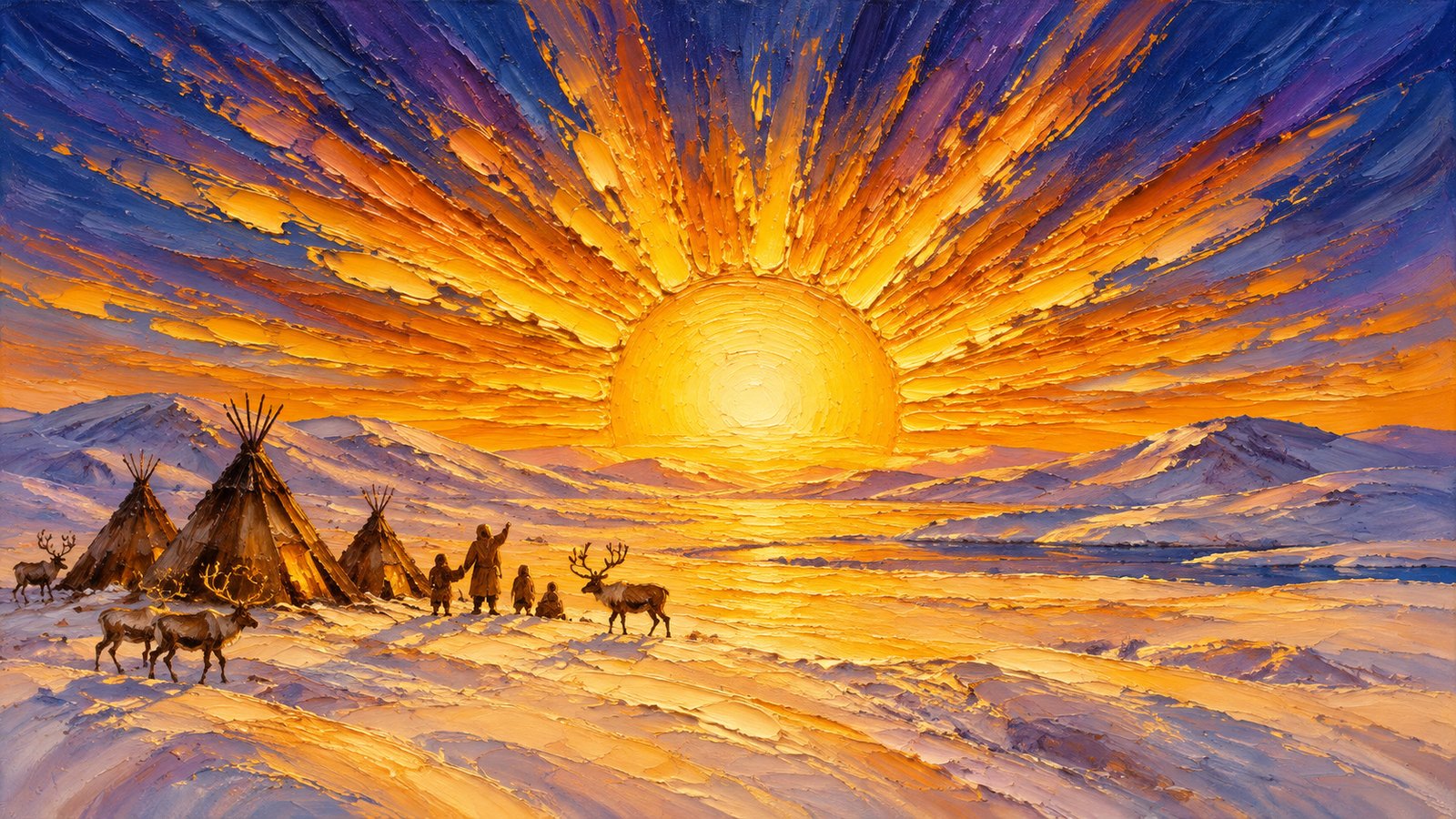
High in the Andes of South America, where the air is thin and the Sun is close enough to touch, the Inca built the largest empire the Americas had ever seen, and they ran it on one idea: the Sun is our father, and we can prove it.
The Inca · children of the SunA king who shone
The Inca said the world's maker, Viracocha, called the Sun up from an island in Lake Titicaca, the highest great lake in the world, and his name was Inti. Inti married the Moon, the goddess Quilla, which is a lovely thought, the Sun and Moon as husband and wife, sharing one sky on different shifts. And then Inti sent his own son, Manco Capac, down to found the Inca people, which meant every emperor after him was quite literally a child of the Sun. The first emperor wore a costume of sheet gold so that when he walked into a courtyard, he arrived the way his father does: shining.
Gold, to the Inca, was not money. It was the sweat of the Sun, and it belonged to him. Nowhere was that plainer than in the capital, Cuzco, at the temple called Coricancha, the House of the Sun. Its inner walls were lined with seven hundred panels of beaten gold, and outside stood a full-size garden made entirely of metal: a field of golden corn, golden llamas, golden shepherds, a little world in sunlight you could walk through. Deep inside stood the holiest object in the empire: a gold statue of Inti as a small seated boy, rays streaming from his head, his hollow chest holding the ashes of past emperors' hearts. Every morning they carried him out into the daylight. Every night they carried him home. When the Spanish came, the statue was hidden, and in 1572 it vanished from history, almost certainly melted down. The sweat of the Sun became coins.
The hitching postTying the Sun down
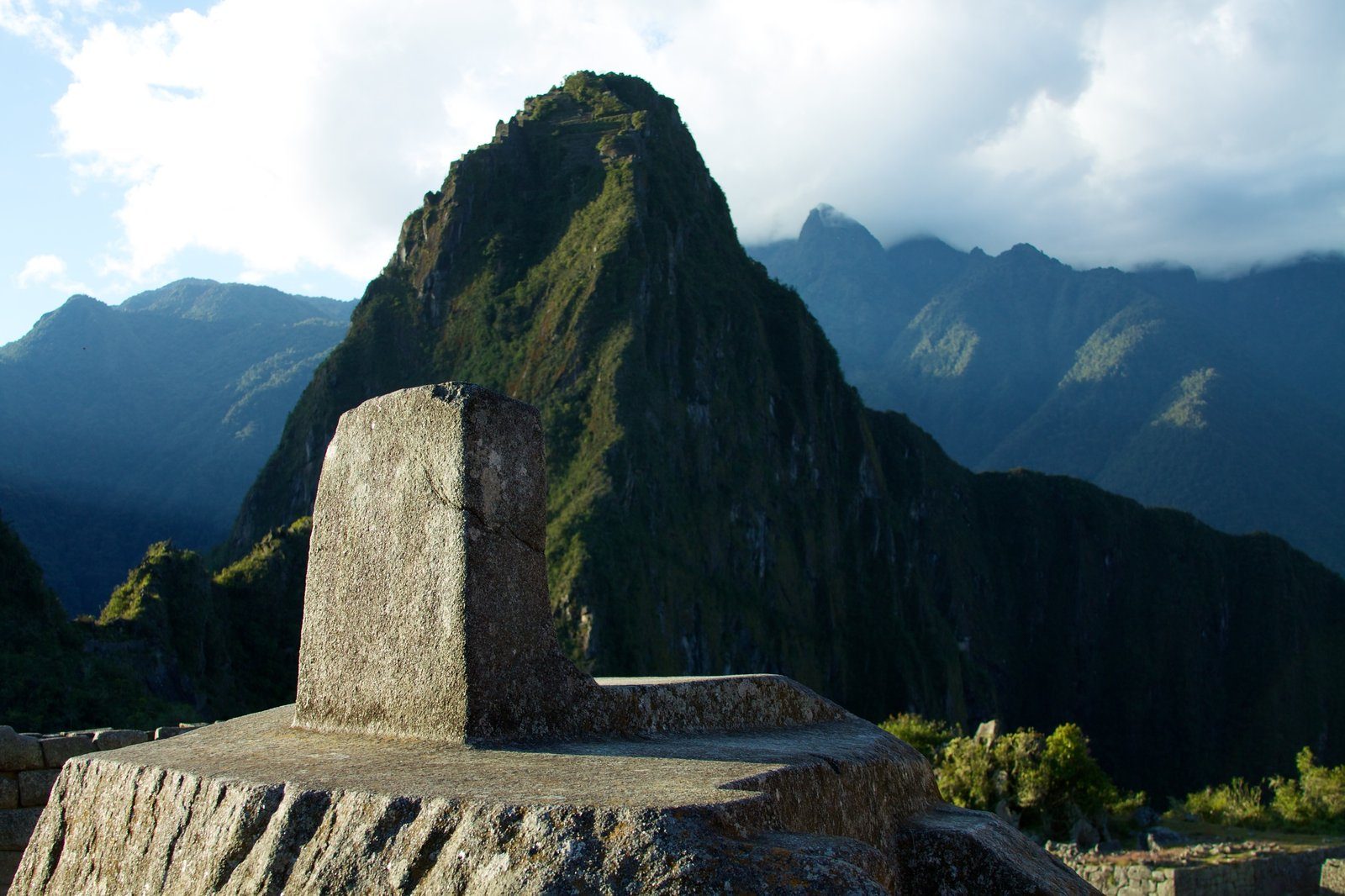
At Machu Picchu, the mountain city the Inca built among the clouds, there is a carved stone at the highest point called the intihuatana, which means the hitching post of the Sun. The name tells you the worry. The Sun crosses the sky like a traveler, and at the solstice it seems to pause at the far end of its road, and you cannot be sure it will turn back unless you do something. So the priests of the Inca did something: on the solstice, with ceremony, they tied the Sun to the stone with a sacred cord, the way you would hitch a horse, to keep it from wandering off the edge of the world. Stones like this were also observatories, places to watch the Sun's year closely, because an empire of farmers runs on knowing exactly when the light will do what.
The great festival was Inti Raymi, the feast of the Sun at the June solstice, which is winter below the equator, when the Sun is weakest and most needs encouragement. Days of music, dancing, feasting, and offerings, white llamas above all. In the worst times there were human offerings too, even children, and it is right to say so plainly, because this is a true history and not only a pretty one. And here is the part that gives me goosebumps: around 1526, during a ceremony for Inti, an eagle was attacked by buzzards and fell struggling from the sky, and the priests took it as an omen. Within a few years a sickness from over the sea was already spreading, and within a decade the empire of the Sun's children had fallen. But listen. Inti Raymi never died. Every June, to this day, Cuzco fills with hundreds of thousands of people, and the Sun's festival is celebrated again in the streets of his own city. Argentina and Uruguay still carry the Inca Sun on their flags, smiling his wide zigzag smile. And when Peru named its money, it reached for the old word: first the inti, then the sol. The Sun.
Travel north now, up through the whole length of two continents, to the plains and deserts of North America, where people did not build the Sun a golden house. They did something harder. They danced for it.
Notes and sources
- World History Encyclopedia · Inti - born from Lake Titicaca, married to the Moon, Manco Capac and the divine emperors, the golden Coricancha, the Punchao statue, the hitching posts, Inti Raymi then and now, the eagle omen, gold as the sweat of the Sun.
- UNESCO World Heritage · Historic Sanctuary of Machu Picchu - the city 2,430 meters up in the Andes, the Inca Empire at its height.